Imagine…
You’re in a coordination meeting.
Your federated model is on the big screen, glowing with red, green, and yellow clashes. An hour passes. Then two. The conversation goes in circles, architects debating with engineers, electricians “blaming” plumbers. You click through hundreds of clashes, each one a tiny battle in a war you feel you’re losing.
You leave the meeting with more questions than answers and a vague sense that nobody is in charge.
If this sounds familiar, it’s because the way we’re taught to approach BIM coordination is fundamentally wrong. I will be honest with you. We’re given powerful software that’s brilliant at finding problems, so we spend all our time reporting on them.
But what about preventing these issues at the first place ?
This week, I want to talk about the hidden hierarchy in MEPF coordination that governs every successful project.
We’ll cover:
- Why gravity is your real, non-negotiable boss.
- Which systems ALWAYS get priority (and why it’s not up for debate).
- How this single concept can eliminate 90% of your frustrating clash review sessions.
The reason most people get this wrong is simple:
They treat coordination as a geometric problem. But it’s not.
It’s a physics, cost, and logistics concern that just happens to be represented in a 3D model. Once you truly understand the unwritten rules of coordination, you stop just finding problems. You start preventing them.
Let’s dive in.
The Real Goal Of Coordination (It's Not Finding Clashes)
To become a top-tier BIM Coordinator, you first need to make sure you don’t make one of the most common mistakes:
Thinking that all clashes are created equal.
Your software will tell you a 50mm electrical conduit hitting a 1200mm HVAC duct is the same “level” of problem as that same duct hitting a 400mm structural beam.
It’s just a clash. Red is red.
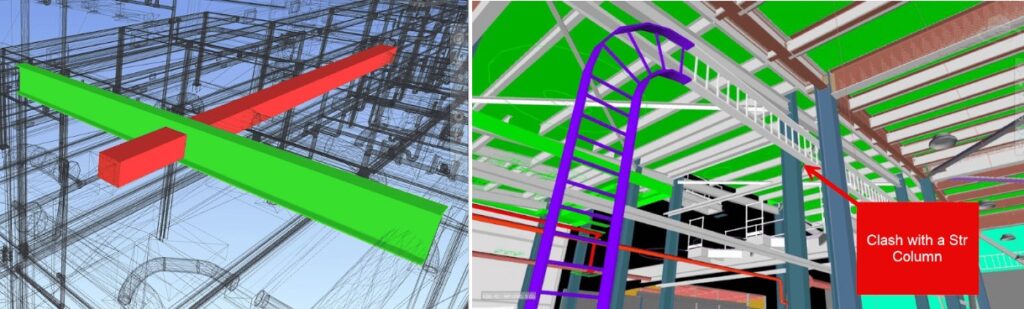
These issues shouldn’t be treated equally
But one of those is a five-minute fix. The other could derail the project schedule for weeks.
Treating all clashes equally is like a hospital’s emergency room treating a paper cut with the same urgency as a heart attack.
The reason we fall into this trap is because we let the tool lead the process. We become servants to the clash report.
So, here’s how to fix it. You need to stop being a “Clash Detector” and start being a “Coordinator.” And your blueprint is The Pecking Order.
The Pecking Order: The Unwritten Law of MEPF Coordination
The very first step to mastering coordination is to understand The Pecking Order.
It’s a simple hierarchy based on one question:
“How hard is it for you to move?”
This isn’t about which trade shouts the loudest in the meeting. It’s a fundamental ranking based on physical constraints, cost of change, and system function.
The systems with the least flexibility almost always win. It’s not a negotiation, it’s a law of project physics. Too many coordinators and designers try to argue with this law, wasting hours in pointless debates. Instead, your job is to enforce it.
#1. Gravity Systems (The Queen)
The queen’s path is non-negotiable.
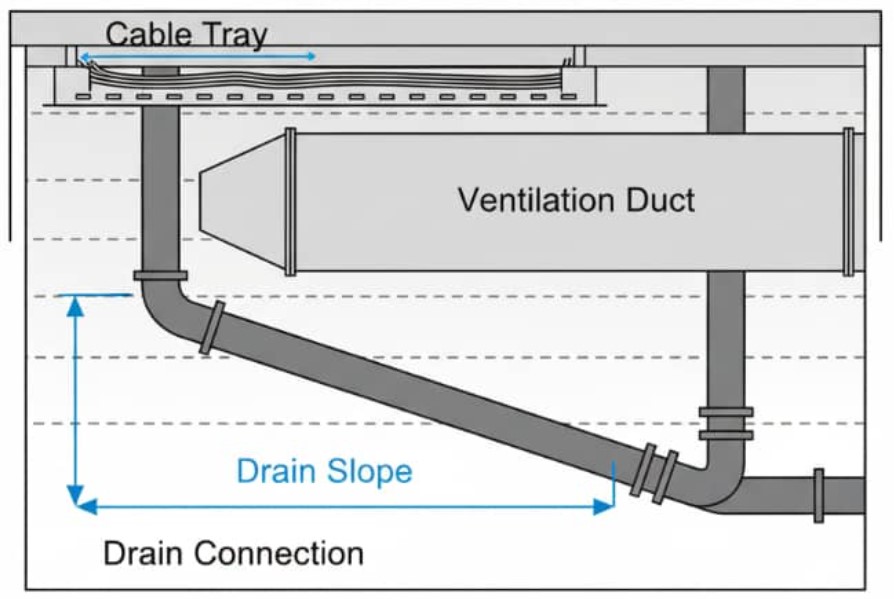
This is your sanitary and storm drainage. Because these systems rely on a constant, unbroken slope to function, their route is practically set in stone.
A 1.5% slope over 20 meters is a 30 cm drop in elevation. You can’t just “move it up” to avoid a clash, because water and waste don’t flow uphill.
When you coordinate, you must identify two key elements: the main vertical pipes, called stacks, which are typically located in shafts, and the horizontal pipes connecting fixtures to them, called drain connections.
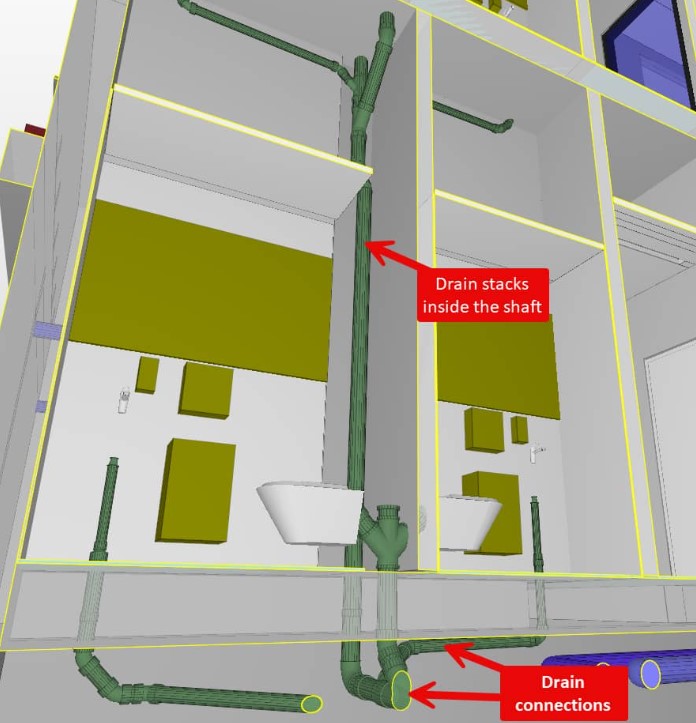
The routing of these horizontal pipes under the floor slab is often the lowest element in the ceiling void below, setting the absolute baseline for everything else.
Think about the cost of change. A clash between a drainpipe and a cable tray is a no-brainer. The cost to add two extra bends and supports to the cable tray might be a few hundred dollars. The cost to re-route the drainpipe, which could involve re-coring a slab or changing finished floor levels, could be tens of thousands.
If you see a clash with a drainage pipe, 95% of the time, the other system has to move. Your job is simply to document this fact.
#2. HVAC (The Elephant)
The elephant gets to sit wherever it wants.
This is your main ventilation ductwork. Due to its sheer size, it’s the next most critical system to place. A massive 1200×500 mm duct can’t weave through small gaps. It needs a clear, primary path, planned right after drainage is routed.
This isn’t just about the ducts themselves; it’s about the entire system, including massive Air Handling Units (AHUs) in the plant rooms and VAV boxes above ceilings.
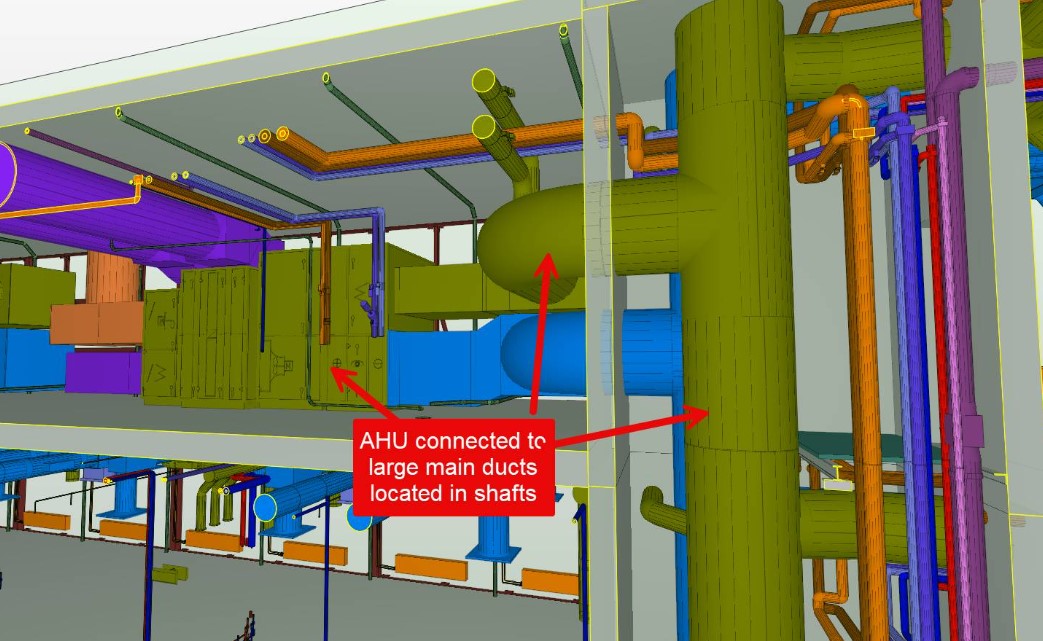
AHU connects with large main ducts that go to shafts
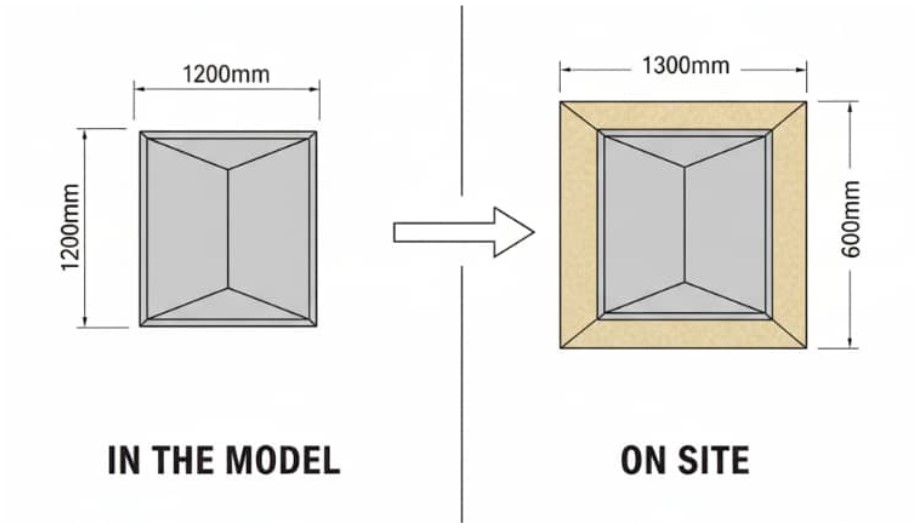
And remember the invisible enemy: insulation.
A duct carrying cold air might require 50mm of insulation. On a 1200x500mm duct, that adds 100mm to both dimensions, making its real-world footprint 1300x600mm.
This is one of the most common sources of on-site clashes that look fine in the model.
Furthermore, HVAC isn’t just about space; it’s about performance. Sharp bends or sudden transitions create turbulence and pressure drops, leading to noise and inefficiency.
The designer’s route might look inefficient, but it’s often dictated by airflow dynamics.
#3. Pressurized Pipes & Fire Protection (The Negotiators)
These systems are smart and flexible, but they have rules.
This category includes heating, chilled water, and sprinkler piping. They are more flexible than HVAC because the pipes are smaller and, being pressurized, don’t require a slope (except for draining purposes).
This allows them to route around obstacles more easily.
However, they are still rigid systems that prefer straight runs and require space for valves, fittings, and supports. Access to valves for maintenance is a classic “soft clash” waiting to happen.
Fire Protection, in particular, is a stickler for rules. A sprinkler system designer isn’t just connecting pipes; they are following a strict code (like NFPA 13) that dictates the exact placement, spacing, and distance of sprinkler heads from the ceiling to ensure proper water coverage in a fire.
You can’t just move a sprinkler head 30cm to the left to align with a light fixture if it breaks this coverage rule.
This is why the final coordination of the ceiling is so critical. It’s a dense puzzle of competing, rule-bound systems.
Interactive BIM Coordination guide full of tips, graphs, mind maps, and practical exercises. It will teach you the basics of BIM Coordination. All for free.
#4. Electrical & Data (The Masters of Adaptation)
Finally, we have the most adaptable systems.
Cable trays and conduits are designed to be flexible. They can rise, fall, and turn to navigate the congested spaces left over by the other trades, which is why they are coordinated last.
But don’t mistake “flexible” for “unlimited.”
- Bend Radii: High-voltage or fiber optic cables have minimum bend radii. A turn that is too sharp can damage the cable and compromise the entire network.
- Separation: You cannot run high-voltage power cables right next to sensitive data cables due to electromagnetic interference (EMI). There are code-mandated separation distances that must be respected.
- Weight: An empty cable tray in your model weighs almost nothing. A tray packed with hundreds of armored cables weighs a ton, literally. so the support systems for these trays are substantial and need to be coordinated with both the structure above and the services below.
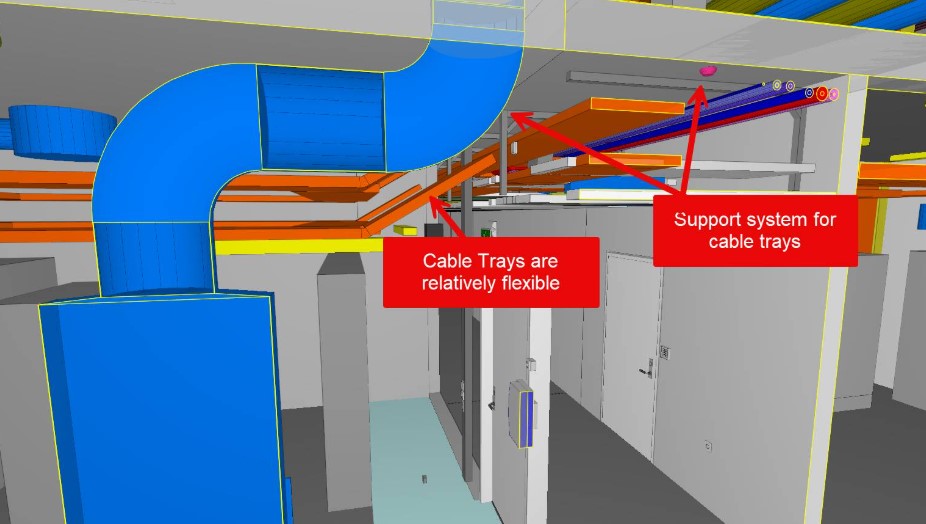
By placing them last, you ensure they fill the remaining space efficiently without causing rework for the less flexible trades.
Your Actionable Takeaway
Next time you open your coordination model, resist the urge to immediately run a clash report. Instead, do this five-minute exercise:
- Isolate Priority 1: Turn on only the Structure and the Gravity Drainage. Does the drainage have a clear, logical path with obvious slopes?
- Introduce Priority 2: Now, turn on the main HVAC ducts. See how they navigate around the drainage and structure. Are there any major conflicts already?
- Add the Rest: Systematically turn on the pressurized pipes, then the fire protection, and finally the electrical trays.
This “layering” approach will instantly tell you where the real coordination problems are. You’ll stop chasing hundreds of minor conduit clashes and start focusing on the major architectural issues that actually threaten the project.
This is the shift from being a BIM technician to becoming a true BIM strategist.
As always, thanks for reading.
If you liked this article, I am pretty sure you will like my BIM Coordination Newsletter.
Every Wednesday, I go deeper into various BIM Coordination topics, share tips, practical materials, and help professionals become better BIM Coordinators.
Join us here: https://becomebimcoordinator.com/newsletter/

If so, I am pretty sure you will like my BIM Coordination Newsletter.
Every Wednesday, I go deeper into various BIM Coordination/Management topics, share tips, practical materials, and help professionals become better BIM Coordinators.