I want to talk about something that has bothered me for a long time:
- the ripple effects of poor coordination in multi-disciplinary teams,
- why often “coordinated” BIM model might be a ticking time bomb,
- and how a 20cm mistake in the design phase snowballs into millions $ USD in project losses.
Why about that?
Simple. I work with BIM Coordination for over a decade now. And I see it very often 👇
A lot of AEC professionals still think that having a 3D model and doing clash detection from time to time equals having coordination.
But once you understand that coordination is a CONTINUOUS PROCESS, not a one-time task, then you unlock massive cost savings, safer job sites, and projects that actually finish on time.
In today’s piece, I want to break down where coordination fails, why it fails, and what the best-performing projects do differently.
When "Good Enough" Coordination Destroys a €7 Billion Project
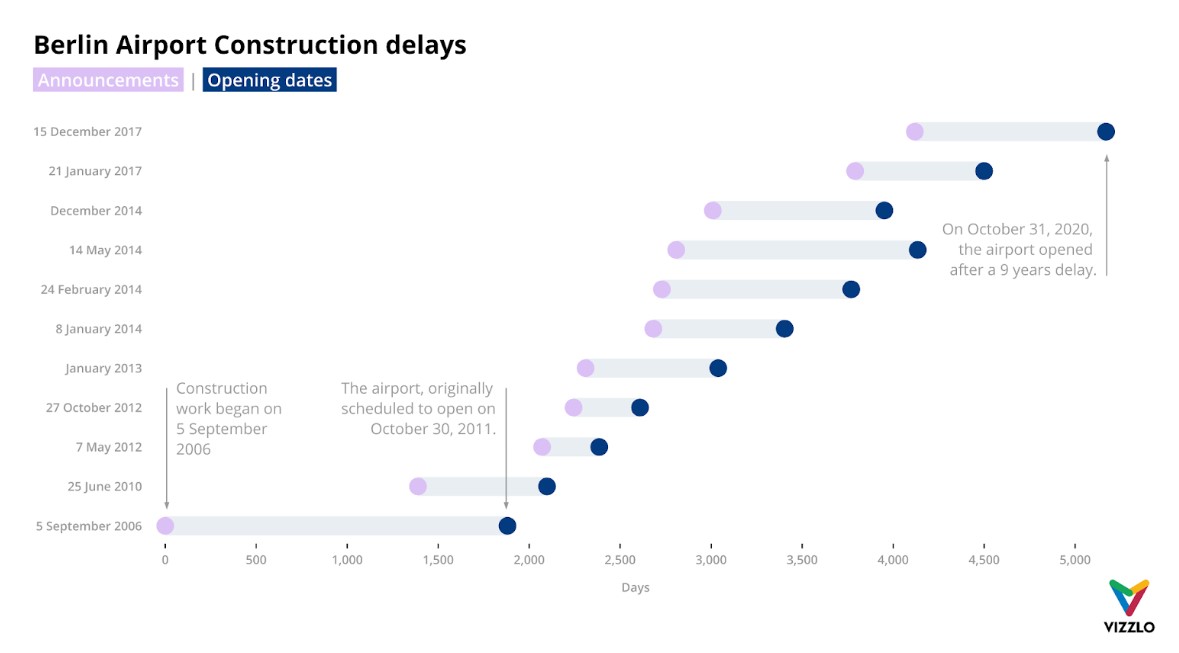
In 2011, Berlin Brandenburg Airport was supposed to open its doors.
Instead, it became Europe’s most notorious “construction disaster”(from the budget point of view). The airport finally opened in 2020, nine years late. The budget exploded from €2.5 billion to over €7 billion. At one point, the solution proposed was hiring 800 people to manually open doors during fire alarms because the automated systems were so poorly coordinated they simply didn’t work.
This wasn’t a technology problem.
The building had BIM models, advanced fire safety systems, and experienced contractors. This was a coordination problem. Architectural changes weren’t communicated to MEP engineers. High-voltage cables were installed in telecommunication conduits.
Version control didn’t exist. Teams worked in silos, and by the time conflicts surfaced on site, kilometers of installations had to be demolished and reinstalled.
Berlin Brandenburg is an extreme case, but the underlying disease is everywhere.
In order to prevent your project from becoming the next cautionary tale, you first need to make sure you don’t make a few of the most common mistakes:
Mistake #1: Thinking “We have a 3D model, so we’re coordinated.” Having a model and having coordination are two completely different things. A model is a data representation. Coordination is the continuous management of that data across disciplines.
Mistake #2: The “my scope is fine” mentality. MEP engineers assume they own the ceiling space. Structural engineers don’t check if their beams clash with ducts. Architects move a wall and don’t tell anyone. Everyone works in isolated silos.
Mistake #3: No clear Level of Development (LOD) definitions. If the architect delivers LOD 300 geometry and the contractor expects LOD 400 fabrication-ready models, you get decision paralysis and expensive gaps in information.
The reason people tend to make these mistakes is because the industry has normalized reactive problem-solving instead of proactive coordination.
And as a result, they keep themselves stuck in a cycle of firefighting, rework, cost overruns, and frustrated stakeholders.
So, here’s how to fix it:
Design Phase: Where Silent Chaos Breeds Expensive Disasters
The very first step to avoiding coordination problems is understanding that errors caught in design cost 1 unit to fix.
Errors caught during construction cost 10 units. Errors discovered during building operations cost 100 units. This is the famous 1:10:100 rule, and it’s not a metaphor.
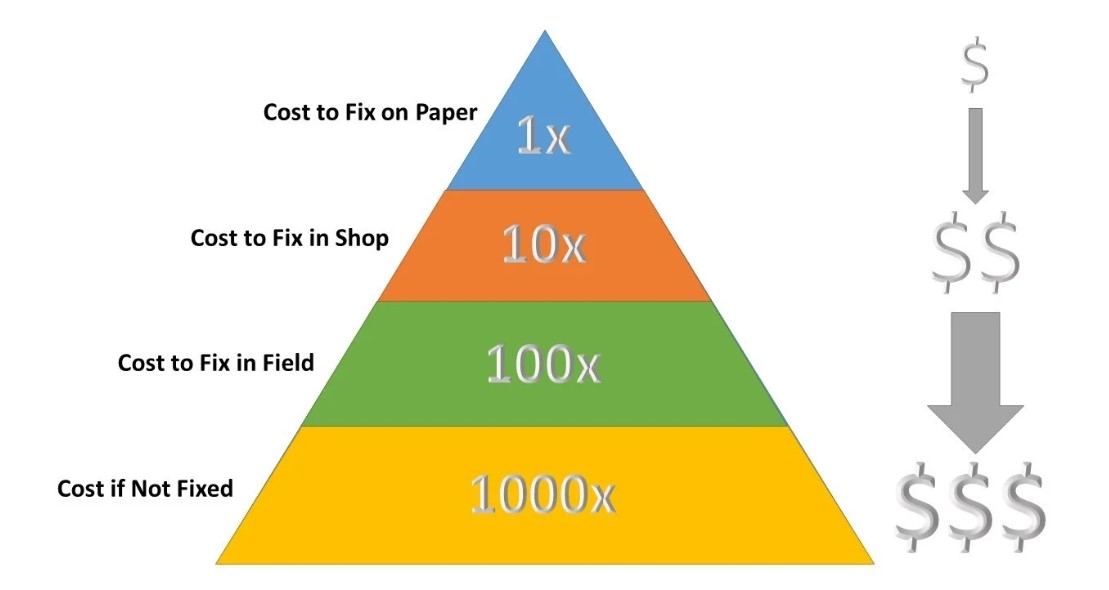
It’s backed by decades of facility management data.
Yet despite this, the design phase is where coordination discipline breaks down most often.
Here’s the myth that kills projects: architects finish their model, send it to structural engineers, who finish their model and send it to MEP, who then discover that the HVAC duct they need runs directly through a primary structural beam.
What actually happens is far messier.
The architect moves a shaft location by 20 centimeters to improve circulation. They save the model as version 3. But the MEP team is still working on version 2 because no one sent them the update. Meanwhile, the structural engineer makes changes to column sizes based on updated loads.
By the time someone federates these models into a single clash detection session, there are 200 clashes,most of them avoidable.
This is what I call "coordination debt."
Just like technical debt in software, it accumulates silently and becomes exponentially more expensive to resolve later. Research from McKinsey shows that 52% of all rework stems directly from poor data and miscommunication between design teams.
Now contrast that with a real success story.
Interactive BIM Coordination guide full of tips, graphs, mind maps, and practical exercises. It will teach you the basics of BIM Coordination. All for free.
A UK NHS hospital project was drowning in delays caused by MEP clashes discovered on site. Crews were standing idle while engineers figured out how to reroute ducts around beams that shouldn’t have been there. The project hired an external BIM coordination service to implement rigorous clash detection.
The result? They caught and resolved 92% of conflicts before a single trade set foot on site.
On-site conflicts dropped by 78%. They saved £500,000 in avoided rework alone.
The takeaway here is brutal but simple:
If you don’t have a named BIM Coordinator, a weekly model federation schedule, and a Common Data Environment with version control, you’re not coordinating, you’re hoping.
Construction Phase: Where Silent Problems Become Loud Emergencies
The next step to preventing coordination disaster is recognizing that the construction site is where hope meets reality.
And reality is unforgiving.
When a conflict that should have been caught in the model gets discovered on site, the domino effect begins. A mechanical contractor discovers that the ventilation duct clashes with a structural steel beam. Work stops.
An RFI (Request for Information) gets submitted. Engineers take 3-5 days to respond. A new solution is designed. Materials are re-ordered. Meanwhile, the crew stands idle or gets relocated to another area, creating ripple effects on the schedule.
The financial damage is staggering.
Studies show that rework can consume anywhere from 3% to 9% of total project costs. For a $100 million project, that’s $9 million that could have been saved.
But there’s an even darker side to poor coordination that doesn’t show up in budget reports: safety.
Research reveals that over 1/3 of all construction site injuries occur during rework activities. Think about what rework actually means on a job site. It’s not planned work.
- It’s breaking out concrete with jackhammers in tight spaces to relocate a pipe that was installed in the wrong place.
- It’s working under time pressure to fix something that should have been right the first time.
- It’s improvised solutions in uncontrolled conditions.
People get hurt.
Let me give you a visual of how bad this can get. At Berlin Brandenburg Airport, the fire safety and smoke extraction systems were so poorly coordinated with the architecture that they proposed hiring 800 workers whose entire job would be manually opening doors during emergencies because the automated systems couldn’t be made to work.
That’s not construction, that’s disaster recovery.
Compare that to Crossrail, London’s Elizabeth Line. This mega-project managed over one million CAD and BIM files in a centralized Common Data Environment.
They invested £120,000 in 4D simulation for just one station (Farringdon). That simulation identified scheduling clashes that would have caused massive delays and cost overruns
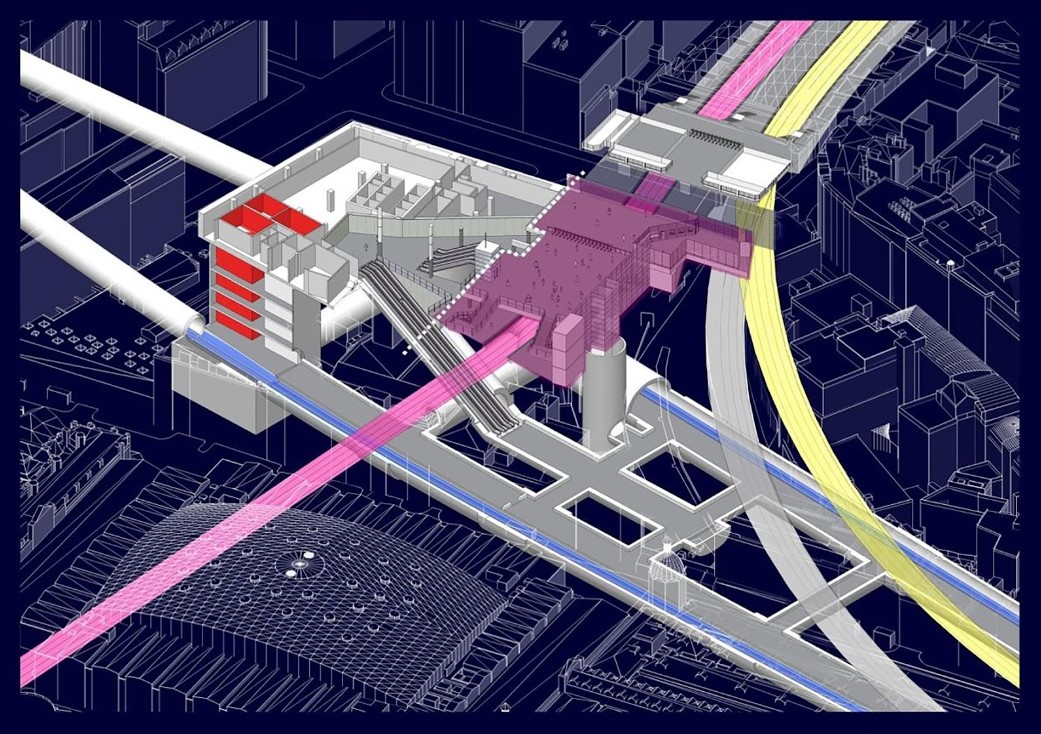
The savings? £8 million.
That’s a return on investment of over 6,000%.
The lesson is clear: What gets measured and coordinated in the model doesn’t have to be fixed with hammers and people’s health on site.
Why This Matters to AEC professionals Right Now
Berlin Brandenburg Airport didn’t fail because of bad technology.It failed because teams didn’t coordinate their work with each other correctly.
The NHS hospital didn’t succeed because of magic software. It succeeded because someone made coordination a priority and backed it with process, people, and accountability.
The data is undeniable.
Professional BIM coordination delivers a 4.5:1 return on investment. For every dollar spent on rigorous coordination, you save $$ in avoided disasters. And that doesn’t even account for the lives saved by reducing rework-related injuries.
Coordination isn’t a phase. It isn’t a checkbox. It’s the continuous discipline that separates projects that deliver from projects that become cautionary tales.
The question is:
Which category does your current project fall into?

If so, I am pretty sure you will like my BIM Coordination Newsletter.
Every Wednesday, I go deeper into various BIM Coordination/Management topics, share tips, practical materials, and help professionals become better BIM Coordinators.