
Why stop at design?
In the first part, we explored how IFC supports design, coordination, and construction preparation. But the real strength of the IFC model becomes even more visible when we look beyond these early stages.
IFC is not just about creating and exchanging models - it’s about extending the value of data across the entire lifecycle of infrastructure projects. From construction monitoring to asset management and compliance, IFC continues to play a key role long after design is completed.
Below are five additional practical IFC use cases that demonstrate how the model supports execution, validation, and long-term operation.
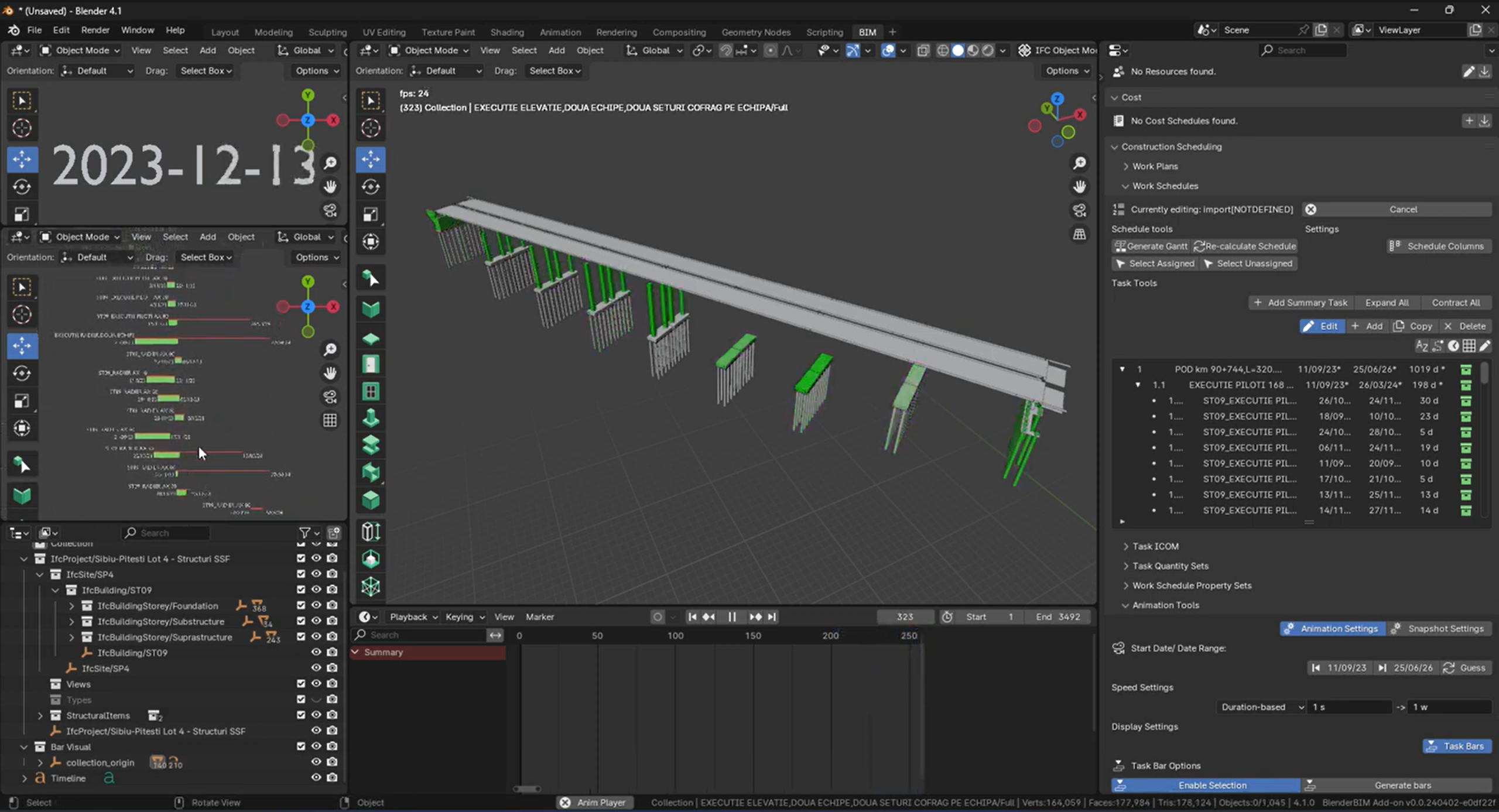
1. 4D Construction Sequence Modelling
One of the most powerful applications of IFC is linking the model with time.
By integrating scheduling data, IFC models can be used to simulate construction sequences in a 4D environment. This allows teams to visualize how the project evolves over time and better plan site activities.
For this use case, geometry such as TIN and BRep is combined with time-related data and object classification.
Example: A bridge construction divided into stages (foundations, piers, superstructure) allows tracking the sequence of works and identifying potential conflicts in the schedule.
2. As-built vs. As-planned Comparison
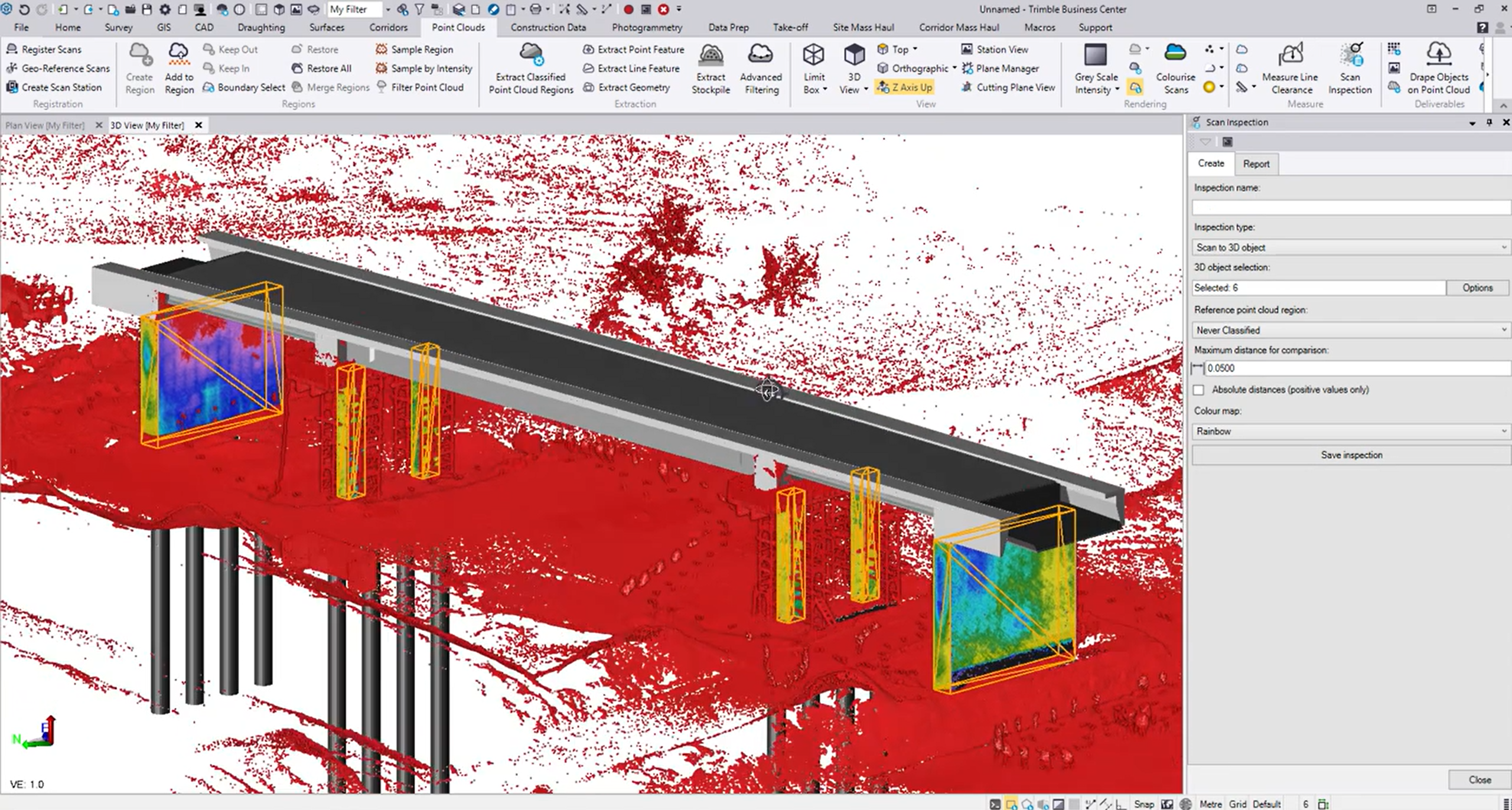
Another important use case focuses on quality control during construction.
Reality capture data (e.g., laser scanning) is compared with the IFC model to verify whether the structure has been built according to design.
The process relies on geometric comparison (TIN, BRep) and semantic data such as classification and tolerance values.
Example: A 3D scan of a bridge can be compared with the design model to verify the position of piers or the geometry of the span and detect construction deviations.
Do you want to learn more about BIM for Infrastructure and IFC 4.3?
Visit ROADTOBIM.COM for more details or join the waiting list now
⬇️⬇️⬇️
Join the Waiting List
Create your own path to BIM in infrastructure. Join the waiting list and be first to know.
Thank you!
You have successfully joined our subscriber list.
3. Design to Construction Layout (Stake-out)
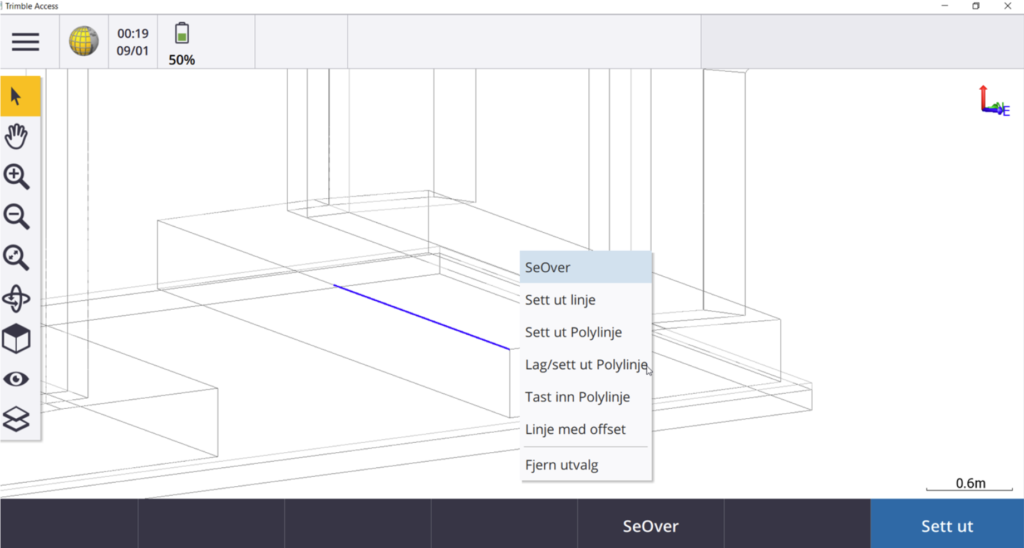
IFC models can also directly support on-site layout and positioning.
In this case, the model is used to define precise points, lines, and geometries that guide surveyors and construction teams during stake-out.
The exchange typically includes simplified geometry (points, curves, Brep) and basic classification data.
Example: Bridge foundation points or alignment geometry can be exported from the IFC model and used directly in surveying equipment.
4. Progress Monitoring
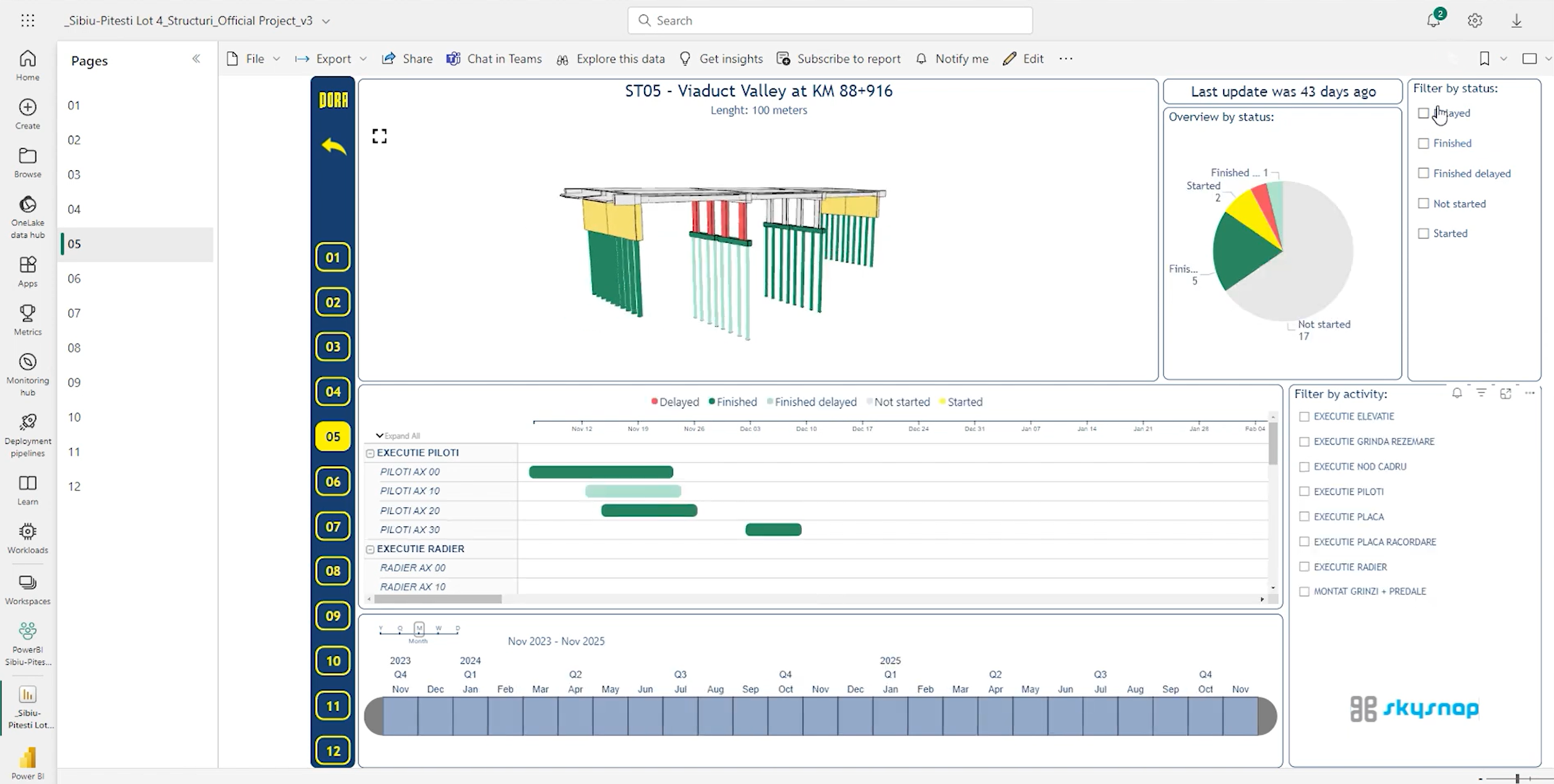
IFC can be used to monitor the ongoing progress of construction projects.
Data from site surveys or reporting systems can be integrated with the model, allowing the status of individual elements to be continuously updated.
In this case, geometry (TIN, BRep, Sweep) is combined with time-related data and the spatial structure of the model.
Example: During bridge construction, the current status of piers and spans can be compared with the schedule to quickly identify delays or progress ahead of plan.
5. Code Compliance Checking
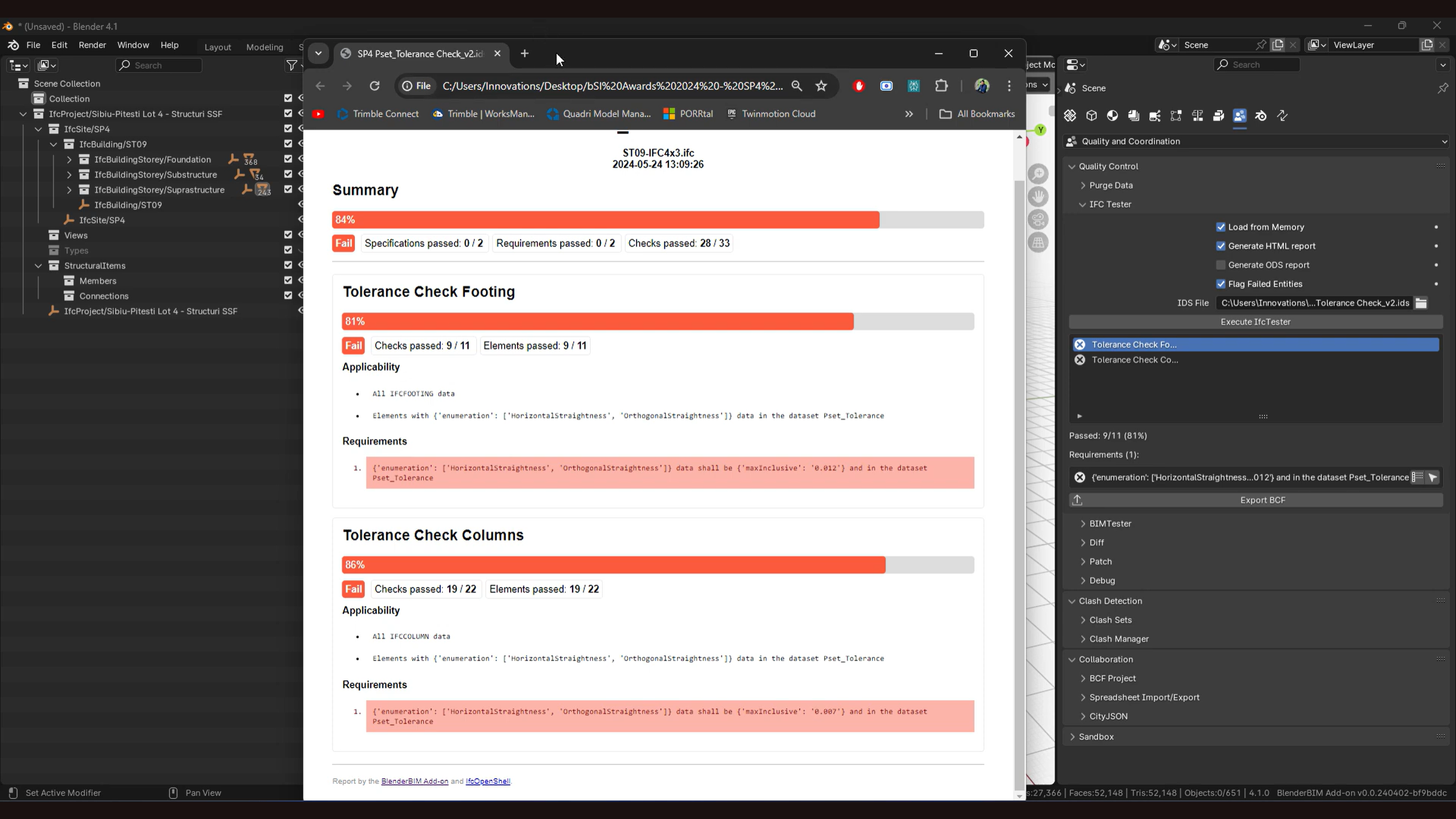
IFC can also support automated validation of design against regulations and standards.
By transferring design parameters such as alignment, speeds, or loads, the model can be checked in dedicated validation tools.
The focus here is less on complex geometry and more on structured data and design rules.
Example: A bridge approach or related infrastructure geometry can be automatically checked against design requirements and safety criteria.
Summary
IFC is far more than a format for exchanging design data - it is a framework that supports the entire lifecycle of infrastructure projects.
From construction planning and site execution to quality control and progress tracking, IFC enables a continuous flow of reliable information between systems and stakeholders.
By extending the use of IFC beyond design, project teams can unlock real efficiency gains, reduce errors, and build a truly connected digital process.
Do you want to learn more about BIM for Infrastructure and IFC 4.3?
Visit ROADTOBIM.COM for more details or join the waiting list now
⬇️⬇️⬇️
Join the Waiting List
Create your own path to BIM in infrastructure. Join the waiting list and be first to know.
Thank you!
You have successfully joined our subscriber list.